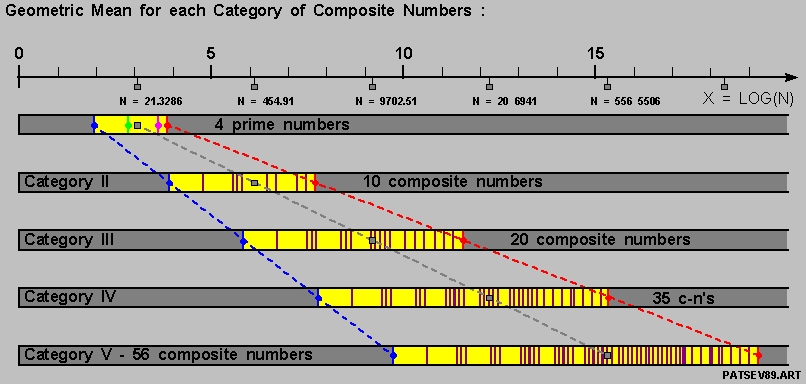
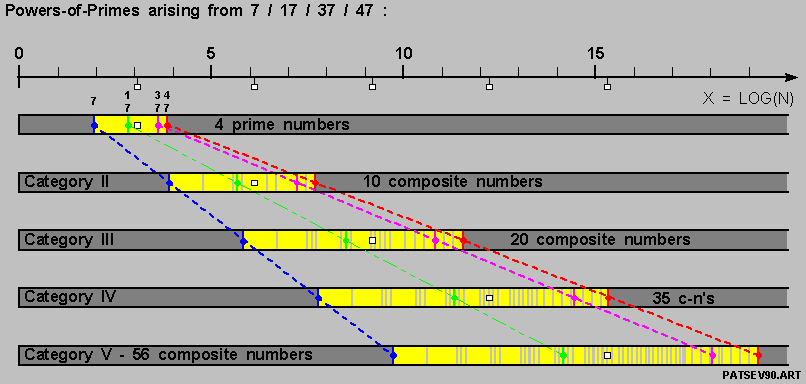
- for the the 4 prime-numbers [ 7 / 17 / 37 / 47 ] :
- [ 7 ] is the smallest prime-number
and
- [ 47 ] is the largest prime-number .
- [ 7 ] is the smallest prime-number
It then follows that :
- For the derived [ Category II Composite Numbers ] ,
- the range would run from [ 49 = 7 x 7 ] to [ 2209 = 47 x 47 ] .
- For the derived [ Category III Composite Numbers ] ,
- the range would run from [ 343 = 7 x 7 x 7 ] to [ 10 3823 = 47 x 47 x 47 ] .
- For the derived [ Category IV Composite Numbers ] ,
- the range would run from [ 2401 = 7 x 7 x 7 x 7 ] to [ 487 9681 = 47 x 47 x 47 x 47 ] .
- and so-on-and-so-forth .
We then have this schematic presentation of the above ranges , on a [ logarithmic scale basis ] , as per this diagram below .
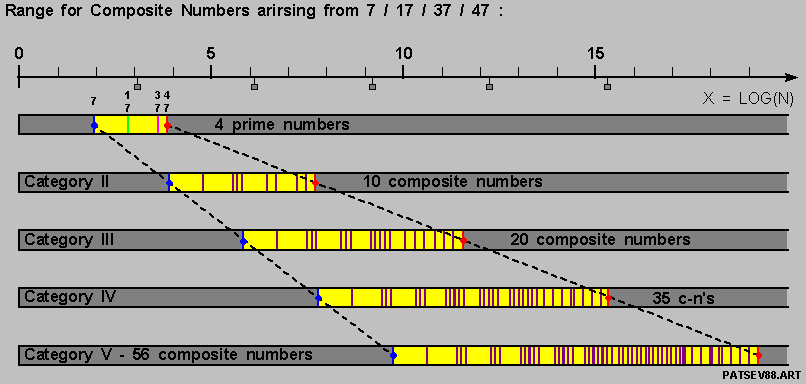
- The range for each Category is then :
- dependent on a specific { power of the [ smallest prime-number ] } on the low-side ,
and
- dependent on the same specific { power of the [ largest prime-number ] } on the high-side .
- dependent on a specific { power of the [ smallest prime-number ] } on the low-side ,