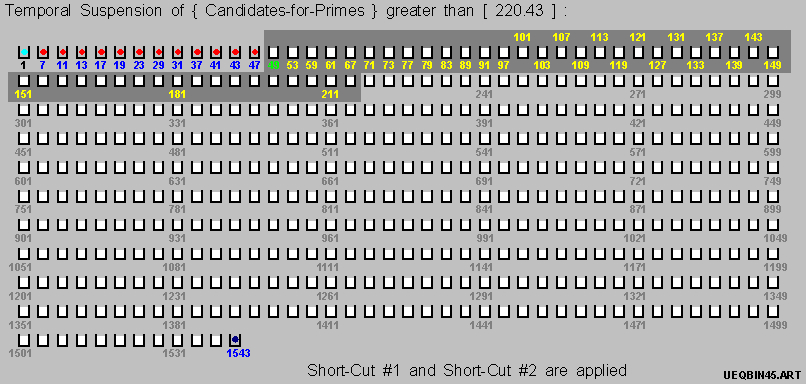
And we can see from this diagram here that :
- [ 7 / 11 / 13 / 17 / 19 / 23 / 29 / 31 / 37 / 41 / 43 / 47 ] are now marked-off as [ prime numbers ] ,
- based on [ Short-Cut #1 ] ;
- [ candidates-for-primes ] above [ 220.43 ] have been suspended ,
- based on our [ Short-Cut #2 ] here .
Since we have established that [ 49 = 7 x 7 ] is not a prime-number ,
- this then leaves us only 44 { candidates-for-primes } , from [ 53 ] thru to [ 217 ] ,
- for our consideration to mark-off as an [ Assumed Prime-Number ] .