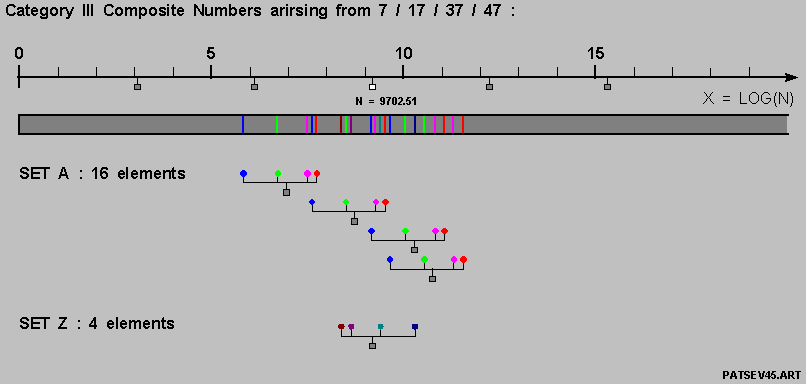
- there are exactly 20 distinct-and-different { Category III Composite Numbers } here ,
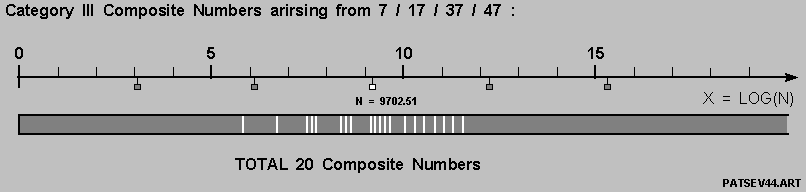
and
- the Geometric Mean of these 20 Composite-Numbers is roughly [ 9702.51 ] .
- [ Set A ] and [ Set Z ] respectively .
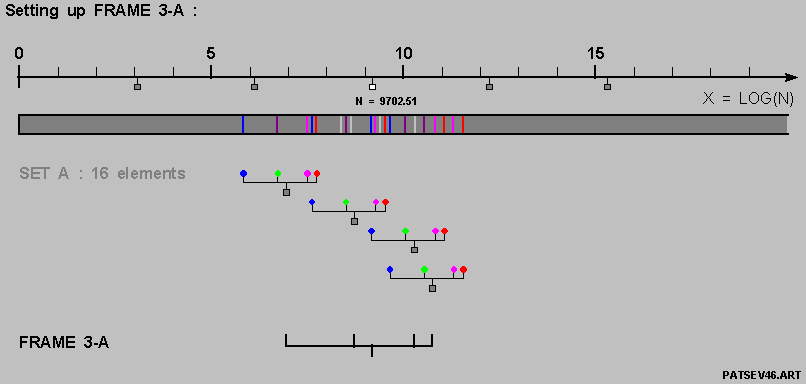
For [ Set A ] with 16 elements ,
- the Natural Logarithms here are then :
SET A Value of [ N ] 343 833 1813 2303 LOG(N) 5.8377 6.7250 7.5027 7.7420 ************ ************ ************ ************ ************ Value of [ N ] 2023 4913 10693 13583 LOG(N) 7.6123 8.4996 9.2773 9.5166 ************ ************ ************ ************ ************ Value of [ N ] 9583 2 3273 5 0693 6 4343 LOG(N) 9.1677 10.0550 10.8335 11.0720 ************ ************ ************ ************ ************ Value of [ N ] 1 5463 3 7553 8 1733 10 3823 LOG(N) 9.6462 10.5335 11.3112 11.5504 ************ ************ ************ ************ ************
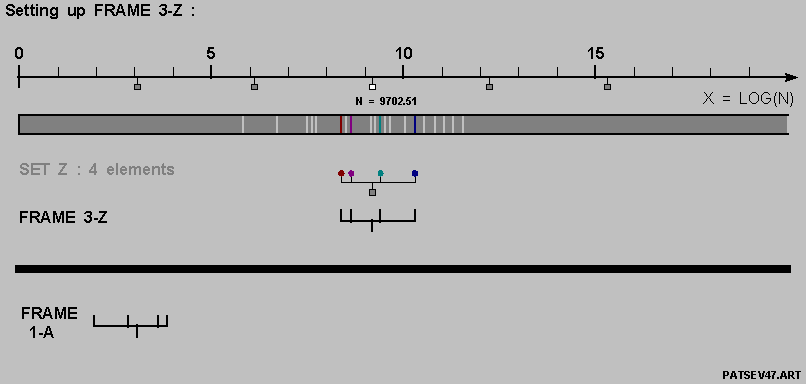
For [ Set Z ] with 4 elements ,
- the Natural Logarithms here are then :
SET Z Value of [ N ] 4403 5593 1 2173 2 9563 LOG(N) 8.3900 8.6293 9.4070 10.2943 ************ ************ ************ ************ ************
We then have this diagram below showing the structural patterns for both [ Set A ] and [ Set Z ] :